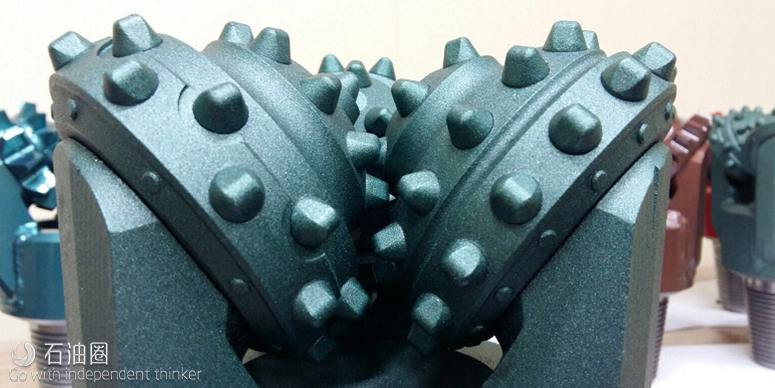
岩石强度分析和集成有限元分析建模能够优化钻头选择!
编译 | 惊蛰
X井是一口深水勘探井,主要目标层是碳酸盐地层。传统作业中,来自邻井的钻头记录是钻头选型所参考的唯一主要数据源。由于数据的可用性极为有限,钻头选型需要依靠反复试验才能确定。
然而现在,岩石强度分析(RSA)软件成为作业前计划钻头选型的一种必需品。基于来自邻井的测井数据,RSA软件通过无侧限抗压强度(UCMPS)计算,已经为X井优化了钻头选型。
RSA软件可为钻井应用程序生成全面的地层评估和钻头选型分析,来自邻井的泥浆记录以往用于解释岩石类型。一些具有岩相分析能力的电子测井,比如伽马射线、压缩声波、密度、中子和电阻率分析,可以量化围岩状态和深度百分比。RSA软件能够提供18种岩石类型,包括砂岩、黏土岩、石灰岩等沉积岩,以及坚硬的火成岩和火山岩等。
钻头选型根据钻头在一定硬度地层的钻进能力来进行。RSA基于这一理论,将压缩声波测井转换为剪切声波,结合地层类型,可用于计算地层的UCMPS。除了钻井参数之外,UCMPS是渗透率(ROP)的主要参考数据。UCMPS还用于计算地层的磨损程度和冲击指数。基于带钻岩性、岩石UCMPS、地层磨损和冲击指数,RSA通过来自12500多口邻井数据,选择出具有适当切割结构组合的固定切削齿钻头或牙轮钻头、保径、液压结构和其他关键特性。
使用RSA软件可以分析邻井的地层特征。为了扩大地层分析的范围,同一地质区块中周围油田的几口井同时也进行了关联和分析。
RSA软件中的PDC钻头选型模块根据抗压强度、地层磨损和地层冲击来选择钻头的刀翼数量、切削齿型号和刀翼轮廓。如果地层比较坚硬,软件将会推荐较少的刀翼以及较小的切削齿型号,以提高钻头耐用性;如果地层主要由页岩和黏土岩组成,则会更容易发生钻头泥包,钻头应具有更好的水力优化,以改善其能力。为了降低由于磨损而导致钻头缩径的风险,应在钻头上增加适当地保径装置。
从RSA软件得到一般钻头选型参考后,执行基于FEA的仿真建模,以检查配备了某种钻头的钻井系统动态。由于所有组件都来自详细单独建模,因此该仿真模型相比于静态BHA建模更加精确。该仿真模型通过使用在实验室获得的岩石力学来模拟切削结构与正在钻探地层之间的相互作用。
模拟的结果可得出所有钻柱部件的钻探行为,包括振动、应力、扭矩,甚至是ROP预测。每个部分的分析顺序是:为每个部分模拟几个钻头选型,以对比钻井动力学。根据稳定性和渗透率确定最佳钻头;在获取最佳钻头选型后,通过更换工具布局、稳定器和切削结构之间的间距来优化BHA;随后制定钻井参数路线图,以作为在现场应用的安全钻井参数指南。
在此次研究中,包含了对8.5英寸和6英寸两部分钻头选型的优化。对于8.5英寸部分,用基础BHA模拟两个不同的钻头选型,已确定最稳定的钻头。第一个钻头是一个带六个刀翼和双排16毫米切削齿的PDC钻头。第二个钻头具有单排切削齿。
该模型使用两个不同深度处的设定钻压和转速参数来进行模拟、在RSA分析的基础上,将模拟中的岩性设定为石灰岩15-20 kpsi UCMPS、页岩2-5 kpsi UCMPS。横向、纵向和扭转振动;ROP对比;回执PDC钻头和随钻测量工具产生的受力和变化趋势,以找到最稳定的钻头选型。
模拟结果表明,单排切削齿(钻头2)的钻头设计比另外一个钻头(钻头1)更稳定;横向振动更低。这些钻头产生类似粘/滑的趋势,但钻头2的值则略低一些。就ROP而言,与钻头1相比,钻头2在碳酸盐地层和页岩地层中的钻井速度通常更快,两个模拟钻头都可以保证井的垂直轨迹。
为了获得安全钻井参数路线图,为振动设定了阈值。即使钻头2产生的振动相对较低,但实际上该值仍被认为是较高的,尤其是钻头处的横向振动量。为了最大限度地减少振动,对BHA进行优化十分必要。
如果持续的时间长,这种横向振动值会导致刀翼损坏和钻井效率底下。振动的阈值审定为中等至高等水平。使用与之前相同的参数和钻井环境模拟了结果BHA选项。基于此完成的优化结果包括将马达稳定器尺寸从8-3/8英寸改为8-1/4英寸,并将马达壳体弯曲度数从1.15°减小到0.78°。
使用钻头2和优化后的BHA进行仿真模拟,得出了一个安全钻井参数路线图。该路线图包含钻头和所有BHA组件,比如马达、稳定器和MWD工具等。
Well X is a deepwater exploration well with a carbonate primary target. Traditionally, bit records from offset wells or fields have been the only main source of data for bit selection. Often, bit selection has been trial-and-error because of limited data availability. Now, however, rock?strength-analysis (RSA) software is a requirement for prejob planning to select a bit. Using log data from offset wells, a bit-selection software based on unconfined compressive strength (UCMPS) calculations has been used to optimize the bit selection for Well X.
Comprehensive RSA for Bit Selection
RSA software generated a comprehensive formation-evaluation and bit-selection analysis for a drilling application. Mud logs from offset wells were used to interpret the rock type. Some electronic logs that have petrographic analysis capability, such as gamma-ray, compressional sonic, density, neutron, and resistivity analysis, quantified the rock appearance and percentage depth-by-depth. The RSA software provided 18 rock types to be analyzed, from sedimentary rocks, such as sandstone, claystone, and limestone, to hard igneous and volcanic rocks.
Bits were selected on the basis of their capability to drill a formation with a certain hardness. On the basis of that study, compressional sonic logs converted to shear sonic, combined with the formation type, can be used to calculate the UCMPS of the formation. Apart from drilling parameters, UCMPS is the main contributor to rate of penetration (ROP). UCMPS is also used to calculate abrasion and impact index of the formation. On the basis of the lithology to be drilled, rock UCMPS, formation abrasion, and impact index, the RSA application uses offset-well data from more than 12,500?wells to choose a fixed or roller-cone drill bit with an appropriate combination of cutting structure, gauge protection, hydraulic configuration, and other critical characteristics.
With the RSA software, formation characteristics from offset wells can be analyzed. To expand the scope of the formation analysis, several wells from surrounding fields in the same regional geology also have been correlated and analyzed.
A polycrystalline-diamond-compact (PDC) -bit selector in the RSA software considers the blade count of the bit, the cutter size, and the blade profile on the basis of the compressive strength, formation abrasion, and formation impact. The harder the formation is, the software will recommend fewer blades and smaller cutter sizes for the bit to improve durability. If the formation consists mostly of shale and claystone, bit-balling flags will be generated and the bit should have better hydraulic optimization to improve bit cleaning. To reduce the risk of having an undergauge bit because of abrasion, proper gauge protection should be added to the bit.
it and Bottomhole-Assembly (BHA) Optimization by Use of Dynamic Finite-Element Analysis (FEA) Modeling
After general bit-selection guidelines were obtained from the RSA software, an FEA-based modeling simulation was performed to check the dynamics of the drilling system with certain bits. This simulation is much more accurate than static BHA modeling because all of the components are modeled in detail individually. The simulation modeled the interaction between the cutting structure and the formation being drilled by using rock mechanics derived in the laboratory. The result of the simulation is the drilling behavior of all drillstring components, including vibrations, stress, torque, and even ROP prediction. The sequence of the analysis for each section is
- Several bit options were simulated for each section to contrast drilling dynamics. The best bit was chosen on the basis of stability and rate of penetration.
- After having the best bit option, the BHA was optimized by changing tool placing, stabilizers, and the spacing between the cutting structures.
- A drilling-parameter roadmap was then produced as a safe-drilling-parameter guideline to be applied in the field.
In this paper, bit optimization for 8.5?in. and 6-in. sections is included. For the 8.5-in. section, two different bit designs were simulated with the base BHA to determine the most stable bit. The first bit is a PDC with six blades and a double row of 16-mm cutters. The second bit has a single row of cutters. .
The simulation was performed with set weight-on-bit and rotational-speed parameters at two different depths. On the basis of the RSA analysis, limestone with UCMPS of 15–20 kpsi and shale with UCMPS of 2–5 kpsi were set as the lithology to be drilled in the simulation. Lateral, axial, and torsional vibration; ROP comparison; and build/drop tendency generated from the PDC bit and -measurement-while-drilling (MWD) tools were then plotted to find the most-stable bit option.
The simulation showed that the bit design with the single row of cutters (Bit?2) is more stable than the other bit design (Bit 1); the lateral vibration is much lower. These bits produced similar stick/slip trends, but Bit 2 has a slightly lower value. In terms of ROP, Bit 2 can drill generally faster, both in carbonate and shale formations, compared with Bit 1. The build/drop tendency plot showed that both simulated bits can maintain the verticality of the well.
To obtain a safe-drilling-parameter roadmap, thresholds were set for vibration. Even though Bit 2 generated lower vibration, the value still is considered high, especially the amount of lateral vibration at the bit. To minimize the vibration, BHA optimization is necessary.
The previous simulation with the base BHA created medium to high lateral vibration at the bit. This lateral vibration value can lead to cutter damage and drilling inefficiency if it lasts for a long time. The threshold for the vibration was set to medium to high levels. Several BHA options were simulated with the same parameters and drilling environment considered earlier. The resulting optimization consisted of changing the stabilizer size at the motor from 8? to 8?in. and reducing the motor bend housing from 1.15 to 0.78°.
The simulation with Bit 2 and the optimized BHA resulted in a safe--drilling-parameter roadmap that considered the bit and all of the BHA components, such as the motor, stabilizer, and MWD tools.